The Ophelias
2009 - Present
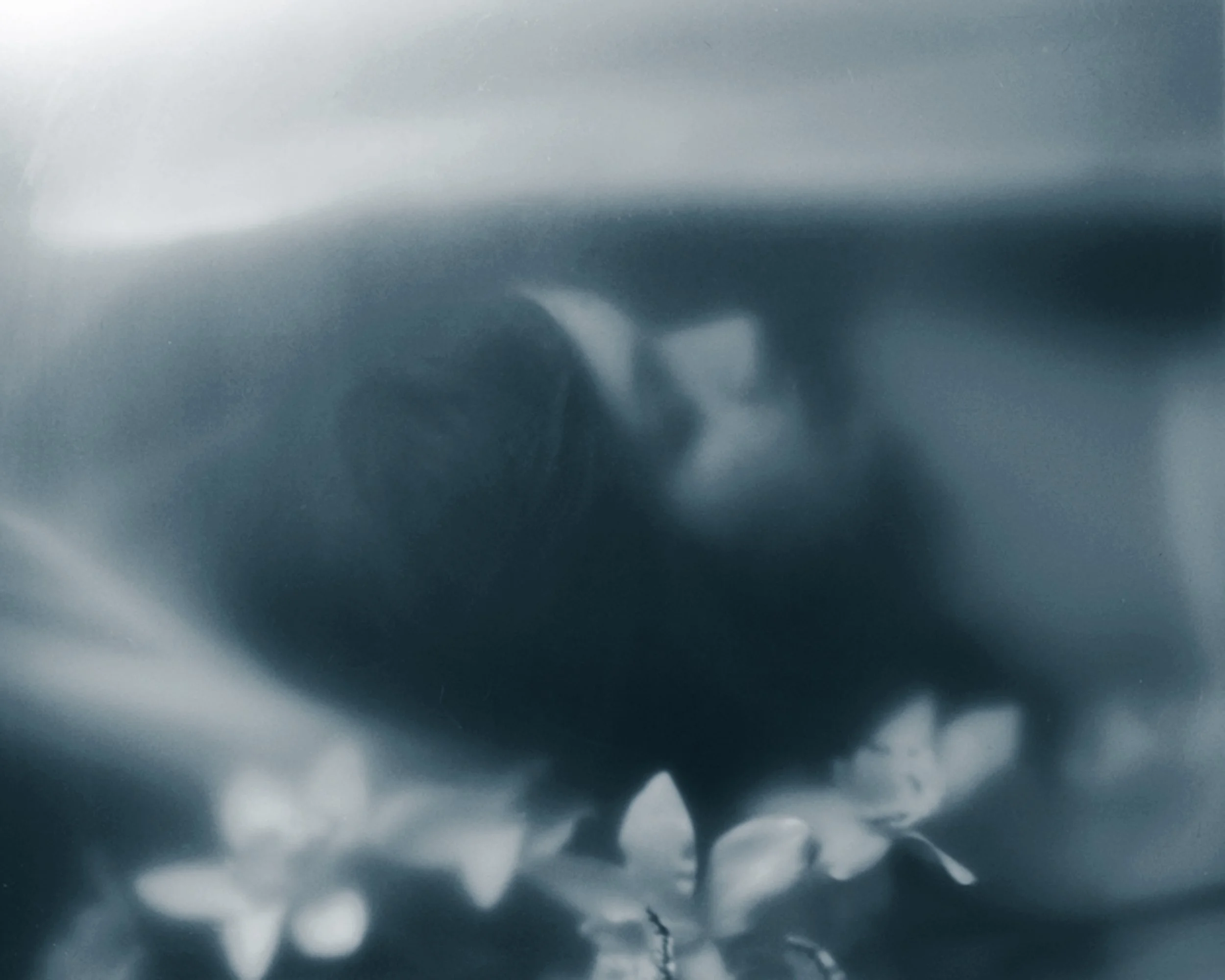
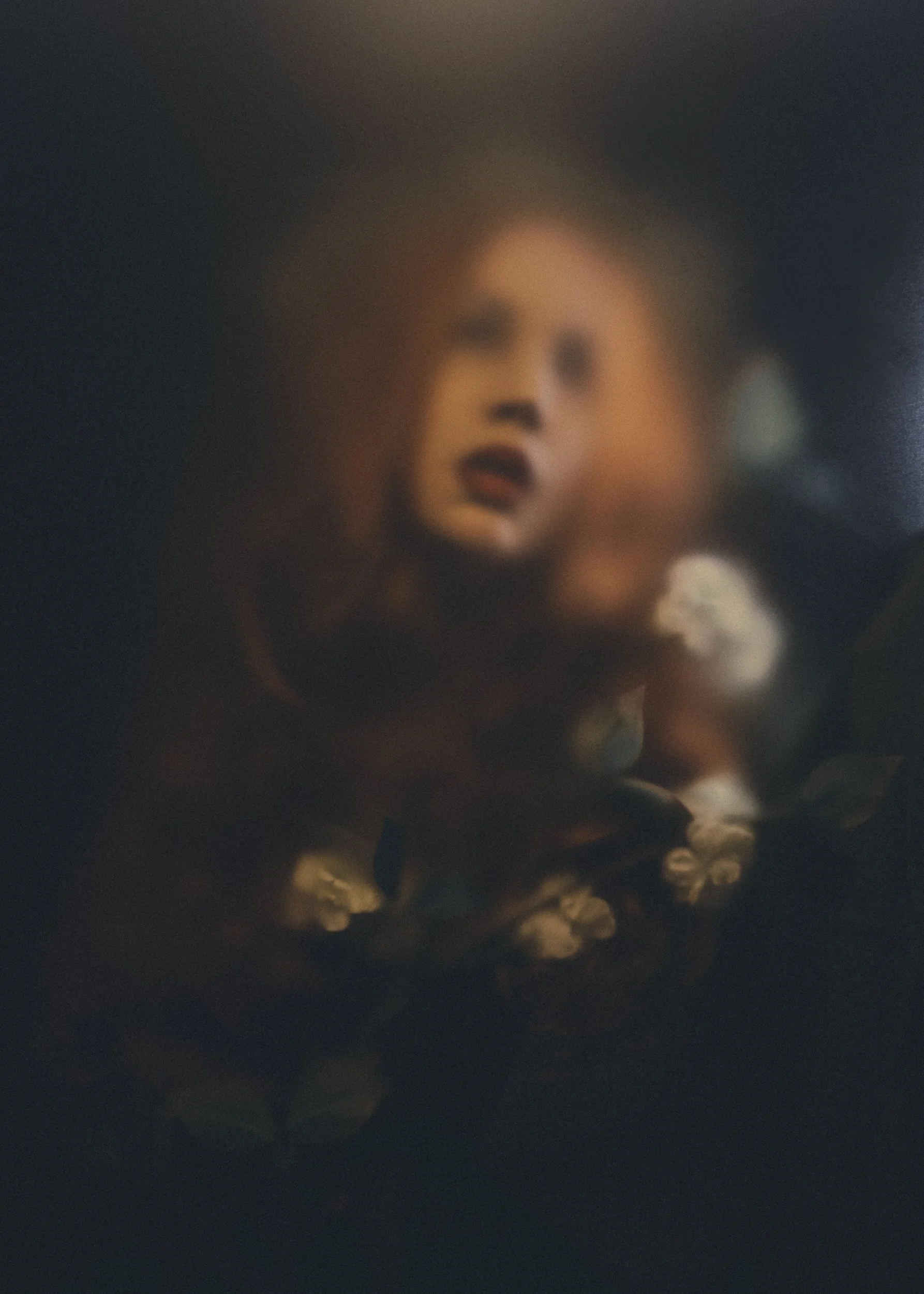
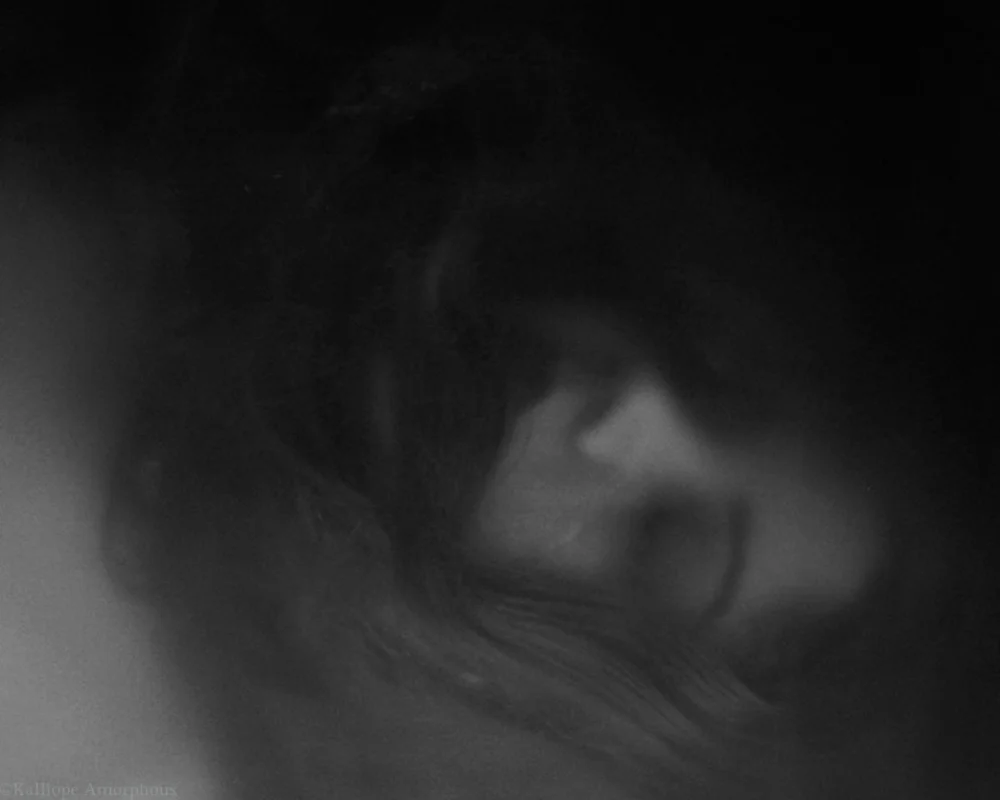
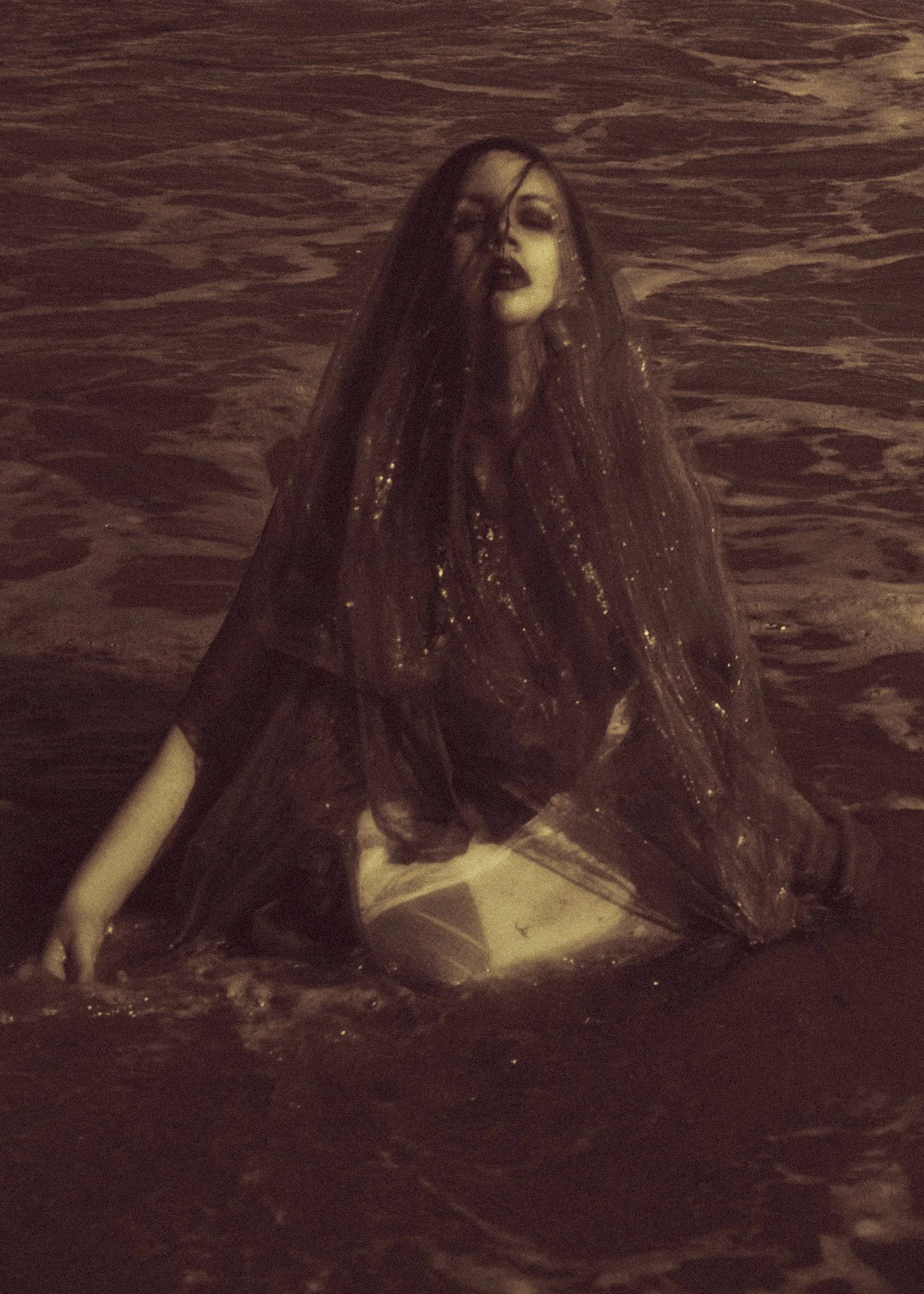
Since 2009, I have returned to the archetype of Ophelia, or the “drowning woman,” as a symbol of birth, death, and survival. Through these images, feelings of otherness, depression, and alienation are offset by glimpses of beauty, resilience, and reckoning.
Both Shakespeare’s Ophelia and women consumed by water were prominent themes in 19th-century art, particularly in the paintings of the Pre-Raphaelites. While I have long been drawn to the beauty of these works, Victorian depictions of women in various states of drowning were often shaped by patriarchal ideals and informed by the male gaze.
For me, the imagery of the submerged woman is rich with symbolism. She embodies both womb and tomb, but is also a demanding ghost who shape-shifts through different and sometimes contradictory emotional landscapes. At times, she is the face of depression and the struggle to avoid being consumed by it. At others, she becomes a figure of strength and survival, echoing archetypes of Medusa, the siren, and the witch.
Depending on the perspective of the viewer, she may be sinking or rising, dying or being born. At times, the figure evokes associations with Yemaya, the ocean mother. The many metaphors contained within this archetype are why it has remained a recurring presence in my work for almost two decades.